The Synchronization of Animation Timings with Prize Pool Expansions in Multi-Platform Reel Competitions
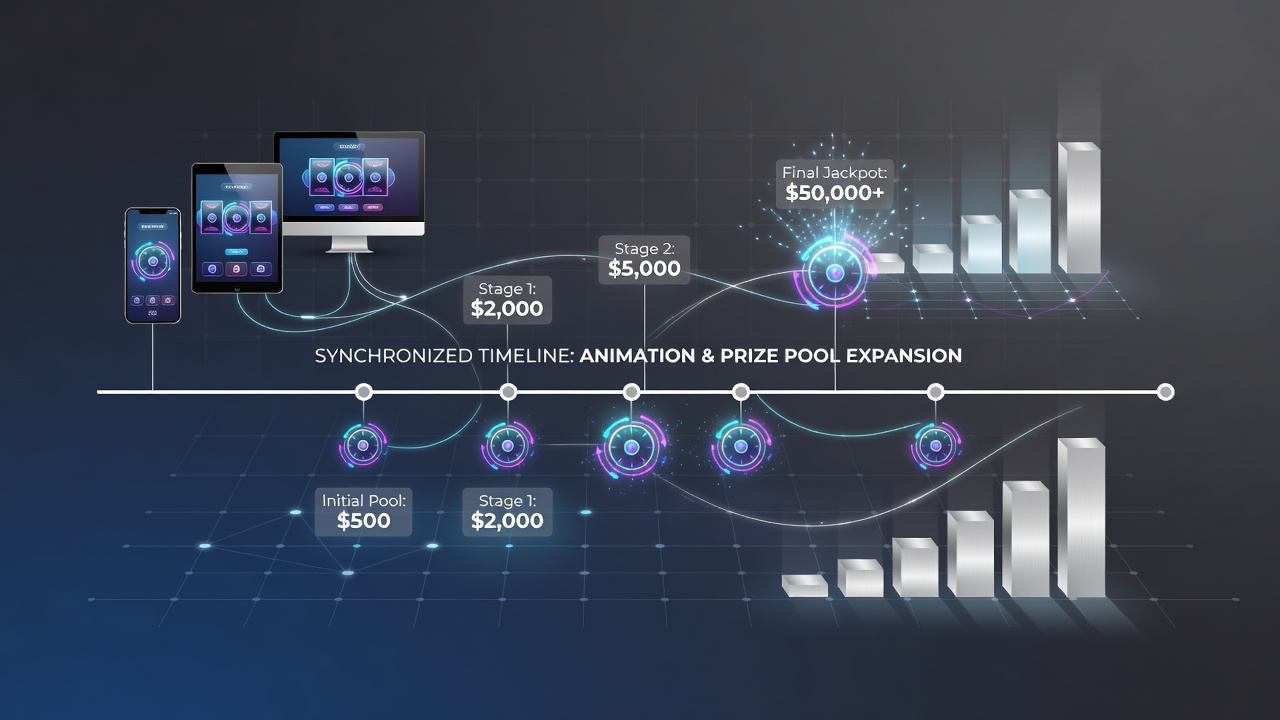
Developers coordinate animation sequences with real-time prize pool growth in multi-platform reel competitions through precise timing protocols that align visual updates across mobile, desktop, and console environments, and these systems rely on shared data streams that trigger both graphical expansions and numerical increments simultaneously. Research from industry labs indicates that frame-rate matching between client devices prevents desynchronization when prize pools increase by incremental amounts during live tournaments, while latency compensation algorithms adjust for network variations that occur across different geographic regions.
Core Mechanics of Animation and Prize Integration
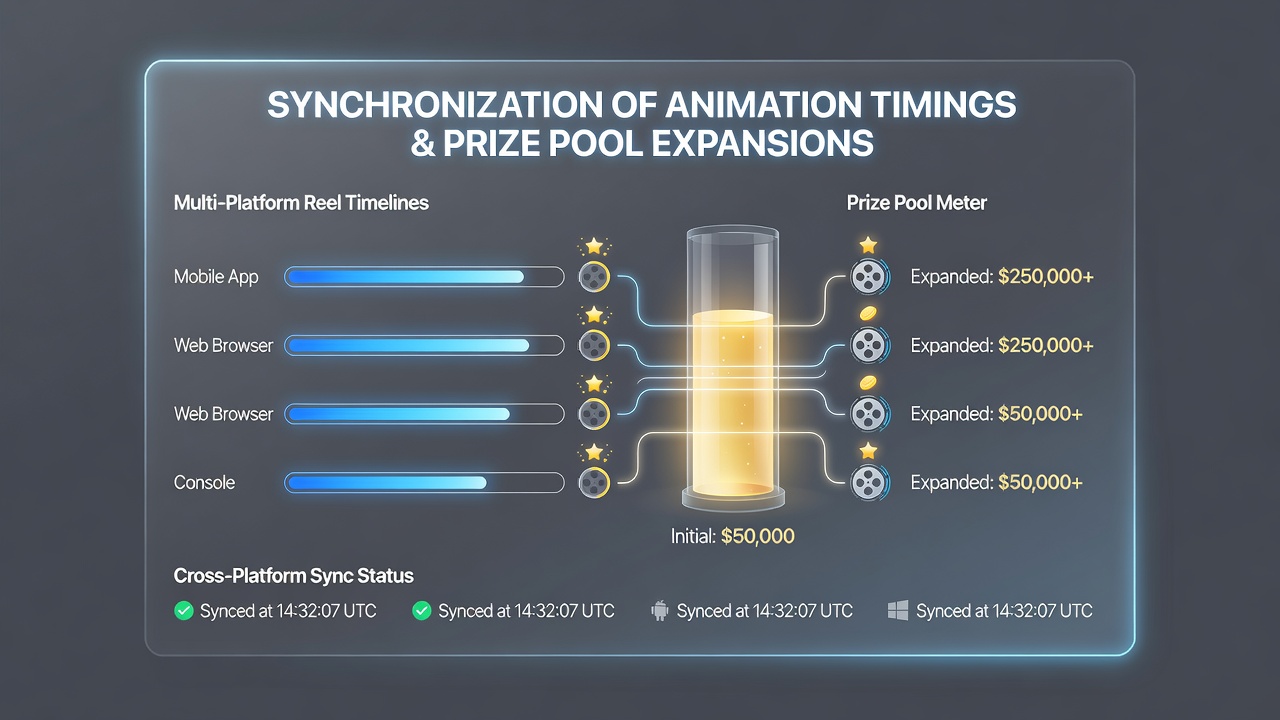
Reel competitions operate on centralized servers that broadcast prize pool values to participating platforms, and animation engines on each device reference these broadcasts to scale visual elements such as expanding meters or particle effects in lockstep with the numerical changes. Data from cross-device testing shows that synchronization occurs within millisecond tolerances when developers implement timestamped event queues, which means an animation frame depicting a growing jackpot indicator activates at the exact moment the server registers a new contribution. Observers note that this coordination reduces visual lag that previously disrupted player immersion during rapid pool expansions in earlier tournament formats.
Multi-platform environments introduce variables such as differing screen refresh rates and processing capabilities, yet standardized timing libraries allow consistent rendering across hardware types. In October 2026 several major providers rolled out updated synchronization modules that incorporated adaptive buffering to handle fluctuations in data delivery speeds, and these modules have since appeared in competitions spanning North American and European markets.
Technical Challenges Across Devices
Network jitter remains a primary obstacle because delays in packet transmission can cause one platform to display an expanded prize pool seconds before another, and developers address this through predictive rendering that anticipates incoming updates based on historical latency patterns. Studies conducted by gaming technology consortia reveal that predictive models achieve over 95 percent accuracy when trained on datasets collected from thousands of concurrent sessions, which allows animations to begin their expansion sequences even before the full data packet arrives. Those who maintain these systems report that fallback protocols revert to static displays if prediction confidence drops below established thresholds, thereby preserving visual integrity during unexpected connection issues.
Platform-specific rendering pipelines further complicate synchronization because mobile graphics processors handle particle simulations differently than desktop GPUs, yet unified animation frameworks translate core timing commands into device-optimized instructions. Evidence from deployment logs indicates that such frameworks have reduced desynchronization incidents by measurable margins in large-scale reel competitions since their adoption.
Implementation in Live Tournament Settings
Tournament organizers integrate these synchronized systems into leaderboards that update in tandem with animated prize indicators, and this integration ensures participants see consistent representations of pool growth regardless of the device in use. According to figures released by the New Jersey Division of Gaming Enforcement, synchronized reel events conducted in regulated markets during 2026 demonstrated stable performance metrics across thousands of sessions, with animation timing deviations remaining below perceptible thresholds for most users. The same reports highlight that prize pool expansions triggered by player contributions now propagate through animation layers without requiring separate manual triggers on individual platforms.
Additional layers of audio cues often accompany these visual expansions, and timing alignment between sound effects and graphical changes relies on the same event queues that govern prize updates. Researchers at institutions examining digital entertainment technologies have documented how mismatched audio-visual pairs previously led to reduced engagement, which prompted the current emphasis on unified synchronization standards.
Future Directions and Standardization Efforts
Industry groups continue to refine protocols that govern animation and prize synchronization, and ongoing work focuses on incorporating machine learning to refine prediction accuracy under variable network conditions. A collaborative report issued by the Canadian Gaming Association outlines testing frameworks that evaluate synchronization performance across emerging device categories, including foldable screens and cloud-streamed sessions. These frameworks measure both visual consistency and the speed at which prize pool expansions register on each platform, providing benchmarks that developers can apply during certification processes.
Regulatory bodies in multiple jurisdictions now request documentation of synchronization reliability as part of approval procedures for new reel competition software, and this requirement has encouraged providers to publish internal timing specifications that allow independent verification. Observers note that such transparency supports broader adoption of multi-platform formats while maintaining operational standards across borders.
Conclusion
The synchronization of animation timings with prize pool expansions represents a foundational element in the operation of multi-platform reel competitions, and continued refinement of timing protocols, predictive models, and cross-device frameworks supports consistent experiences for participants. Data compiled from regulatory submissions and technical evaluations indicates that these systems have matured considerably by late 2026, with measurable improvements in alignment accuracy and reduced incidence of visual discrepancies. As competitions expand across additional hardware types and network environments, the same principles of coordinated event handling and adaptive buffering are expected to guide further developments in the sector.