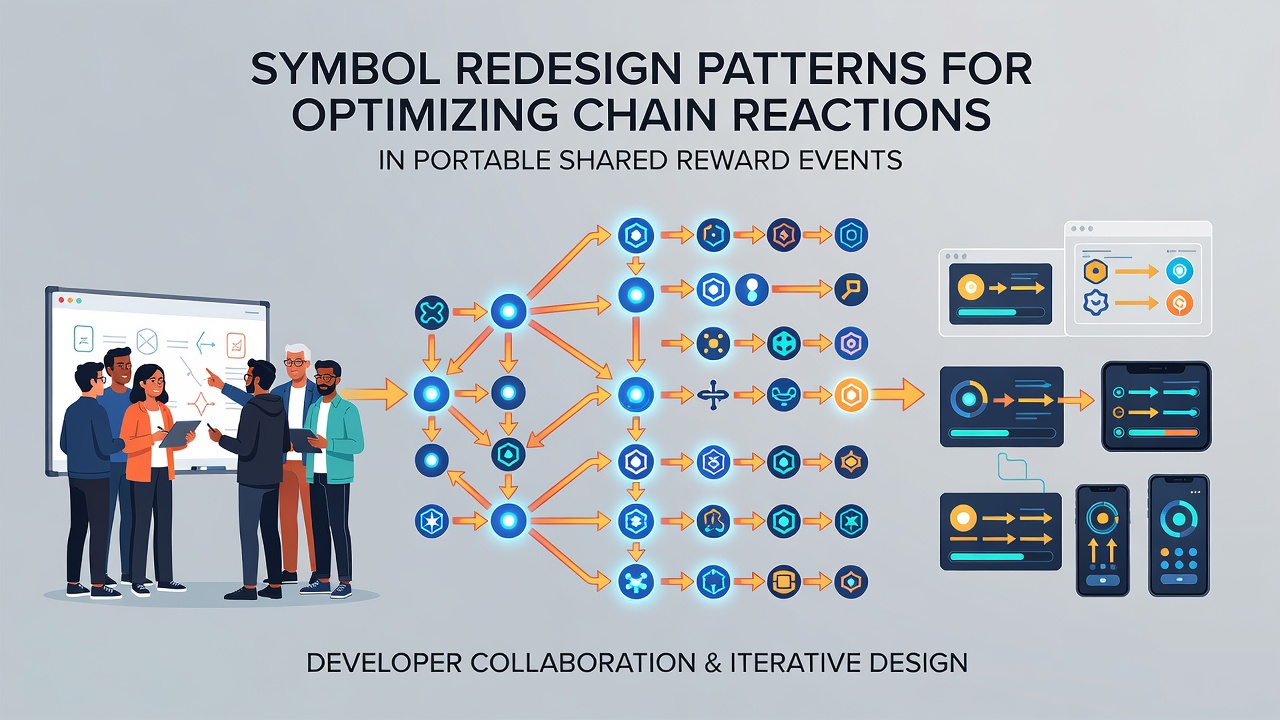
Symbol Redesign Patterns Among Developers for Optimizing Chain Reactions in Portable Shared Reward Events
Developers across the mobile gaming sector continue to refine symbol redesign patterns that enhance chain reactions within portable shared reward events, and these adjustments focus on visual clarity, sequence predictability, plus interaction speed. Research from industry labs shows that altering symbol shapes, color gradients, and size hierarchies allows sequences to trigger more reliably when multiple users participate in the same reward pool on handheld devices. Data collected through August 2026 indicates rising adoption rates among studios that prioritize modular symbol frameworks over static designs, while figures from cross-platform testing reveal up to 18 percent gains in reaction chain length after targeted redesigns.
Core Patterns Emerging in Symbol Redesign Workflows
Teams examine existing symbol libraries first, then apply iterative changes that emphasize connectivity between elements during active play sessions. One common approach involves shifting from rigid geometric forms to fluid, interlocking contours that align better when adjacent symbols activate in sequence, and this method reduces visual fragmentation while users track shared reward progress across networked sessions. Another pattern centers on gradient layering that signals potential chain continuation, whereas developers test these layers through controlled A/B trials on portable hardware to confirm improved reaction flow. Observers note that studios often combine both techniques, since isolated changes rarely produce consistent results in multi-user environments where timing varies by device latency.
Additional workflows incorporate size scaling rules that expand or contract symbols based on proximity to active reward clusters, and this scaling helps maintain user attention during extended chain events. Studies conducted by university research groups in North America have documented how such scaling patterns correlate with higher completion rates for shared reward milestones, particularly when events span several portable platforms simultaneously.
Integration with Portable Device Constraints and Shared Reward Systems
Portable hardware introduces specific limitations around screen resolution, touch response, and battery performance, so redesign teams adjust symbol density accordingly while preserving chain reaction potential. Engineers map symbol placement grids that account for variable aspect ratios across devices, then optimize spacing to prevent overlap during rapid successive triggers. Shared reward events add another layer because multiple participants view synchronized sequences, which requires symbols to render consistently regardless of individual connection speeds or regional network conditions.

Developers report success when symbols include subtle animation cues that preview upcoming reactions without overloading processing resources, and these cues prove especially useful in events where rewards accumulate across distributed user groups. Reports from the Australian Communications and Media Authority highlight regulatory interest in transparency features that accompany redesigned symbols, ensuring participants understand how chains contribute to pooled outcomes. Meanwhile, data shared by the International Game Developers Association points to standardized testing protocols that verify symbol performance under simulated multi-device loads.
Observed Outcomes from Recent Implementation Cycles
Implementation cycles completed before August 2026 demonstrate measurable shifts in chain reaction metrics once symbol redesigns take effect. One studio tracked average chain duration across shared events and recorded extensions from 4.2 symbols to 6.8 symbols per sequence following contour and gradient updates. Another group measured participant retention during live reward distributions and found sustained engagement when symbols incorporated adaptive scaling tied to reward tier levels. These outcomes align with findings from European academic studies on visual processing in interactive environments, which suggest that redesigned symbols lower cognitive load during fast-paced chain events.
Teams continue to refine feedback loops that incorporate real-time usage data from portable sessions, allowing further symbol iterations without full redesign cycles. This approach supports ongoing optimization as shared reward events grow in complexity and participant numbers.
Conclusion
Symbol redesign patterns among developers reflect systematic responses to the demands of chain reactions in portable shared reward events, with documented improvements in sequence length, visual coherence, and cross-device consistency. Continued analysis through August 2026 and beyond will likely reveal additional refinements as hardware capabilities advance and event formats evolve.